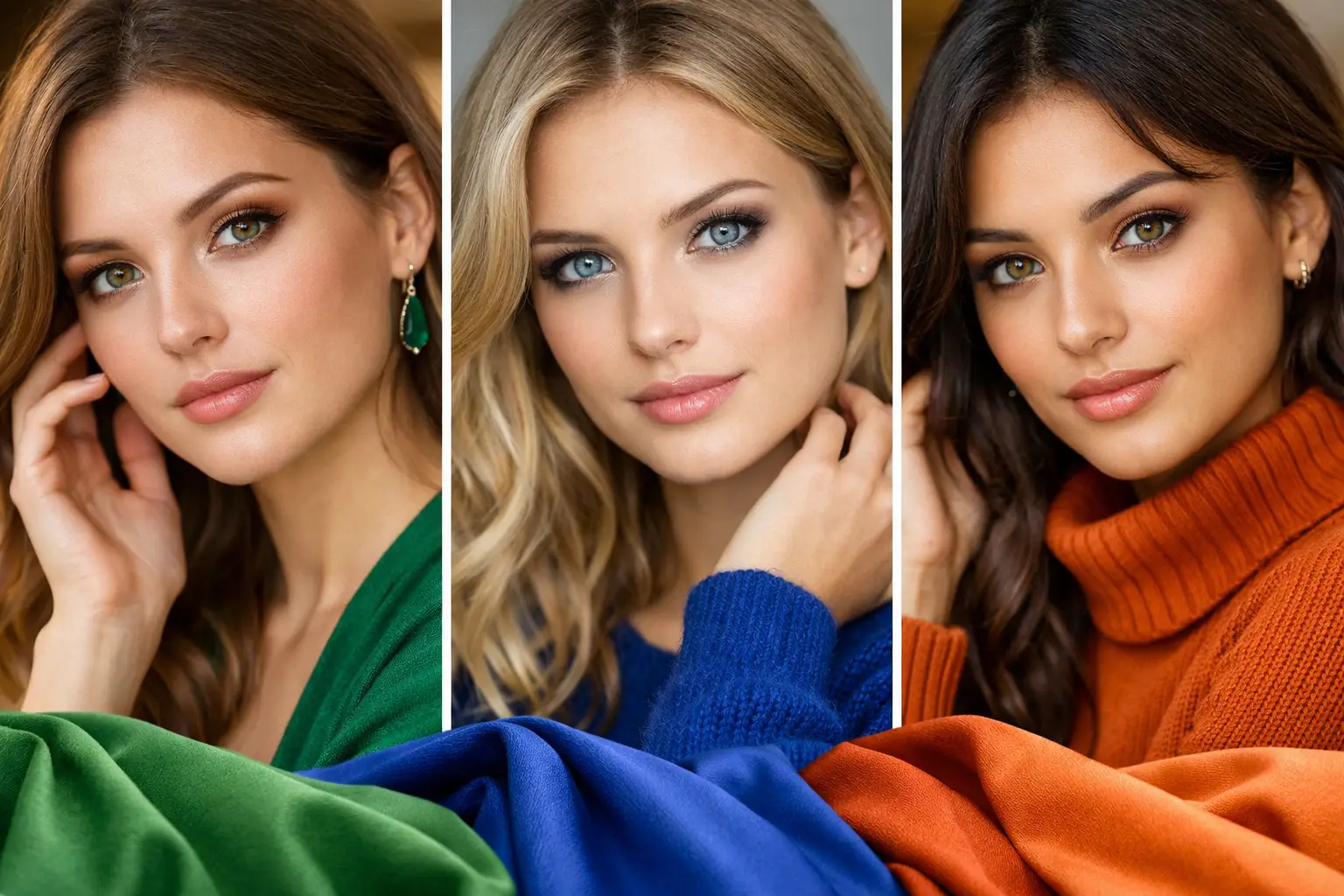
Your eyes can look noticeably brighter in one shirt than another, even when both colors supposedly “match” your eye color. That is why finding the best colors for eye color is less about wearing an exact copy of your iris and more about using contrast, undertones, and the colors around your face.
A good color choice does not need to be dramatic. It might be a navy crewneck that sharpens blue eyes, a berry top that makes hazel eyes look greener, or a warm olive jacket that gives brown eyes more depth. The goal is simple: choose colors that make your features look clear, awake, and intentional.
Start with contrast, not just your eye color
Eye color matters, but it is only one part of the picture. Your skin tone, hair color, and overall contrast determine whether a shade will look polished or overpowering.
Think of contrast as the difference between your features. Someone with dark hair, fair skin, and bright blue eyes has high contrast. They often look great in clear, saturated shades such as cobalt, black, emerald, crisp white, and true red. Someone with medium brown hair, beige skin, and soft hazel eyes may have lower contrast, so smoky blue, sage, dusty rose, and warm taupe can feel more natural.
This is also why a color that makes your friend’s eyes pop may fall flat on you. The same turquoise can look electric on one person and slightly washed out on another. Eye color is the starting point. Your full coloring decides the best version of that shade.
Best colors for blue eyes
Blue eyes usually stand out most next to warm colors, because warm tones sit opposite blue on the color wheel. You do not need to dress in bright orange to get the effect. Softer warm shades often work better for everyday outfits.
Copper, rust, cinnamon, terracotta, coral, peach, camel, and warm gold can make blue eyes look brighter. A rust knit with blue jeans is an easy option for fall, while a coral T-shirt or warm tan overshirt can bring the same effect in warmer weather.
Cool colors can work too, especially if your skin has cool or neutral undertones. Deep navy creates definition around lighter blue eyes, while icy gray-blue can make them appear clearer. The trade-off is that a shade too close to your exact eye color may blend in rather than create contrast. If you wear blue, try a darker navy, a softer denim blue, or a blue with a green or gray undertone instead of an exact match.
For a more formal look, try a navy blazer with a cream shirt, or a warm burgundy dress with gold jewelry. Both combinations frame blue eyes without making the outfit feel costume-like.
Best colors for green eyes
Green eyes can shift dramatically depending on what you wear. Colors with red or purple undertones are usually the strongest choice because they create contrast against green.
Plum, aubergine, wine, cranberry, raspberry, mauve, and deep burgundy are especially effective. These shades can pull out the green in eyes that otherwise look gray, blue-green, or muted. A burgundy sweatshirt, plum button-down, or berry-toned scarf can do more than a head-to-toe statement look.
Warm neutrals also deserve a place in your closet. Chocolate brown, camel, olive, bronze, and warm beige can make green eyes look richer and more earthy. Olive is an interesting case: it can echo green eyes rather than contrast them, but it often works beautifully when the olive is deeper or warmer than the eye color.
Avoid assuming that every green garment will flatter green eyes. Bright grass green can compete with them, especially if your eyes are soft or gray-green. If you love green, choose forest, moss, sage, or teal based on your skin tone, then let a berry lip, scarf, or layer add the contrast.
Best colors for hazel eyes
Hazel eyes are the most flexible because they contain more than one visible tone. They may show green, gold, brown, gray, or even a blue ring depending on the light. Instead of trying to highlight everything at once, choose what you want to bring forward that day.
To make the green in hazel eyes stand out, wear plum, violet, berry, rose, or burgundy. To highlight golden flecks, reach for mustard, camel, copper, warm ivory, olive, and cinnamon. To bring out the brown, choose espresso, navy, charcoal, deep teal, or dark denim.
This makes hazel eyes ideal for repeating a small range of wardrobe colors in different ways. For example, a soft mauve sweater may create a brighter green effect for a casual coffee run, while a camel coat and chocolate knit can make the same eyes look warmer and more golden for work.
Because hazel eyes change with their surroundings, lighting matters more than usual. Take a mirror photo near a window when testing colors. Indoor yellow lighting can make warm tones seem more flattering than they will in daylight.
Best colors for brown eyes
Brown eyes have natural depth, which means they can handle rich colors exceptionally well. Jewel tones such as emerald, sapphire, cobalt, deep teal, and amethyst create a clean contrast that makes brown eyes look brighter. They are easy choices for evening plans, events, and outfits where you want a more defined look.
Warm shades can be equally strong. Burnt orange, marigold, brick red, olive, camel, and warm cream bring out the amber and gold tones often found in brown eyes. If your eyes are very dark brown, lighter warm shades near the face can create beautiful contrast. If they are light brown or amber, deeper shades such as forest green and chocolate may add more definition.
Brown eyes also work well with classic neutrals, but choose them with intention. Black creates sharp contrast and feels sleek, particularly for high-contrast coloring. Softer charcoal, espresso, navy, and cream can be more flattering for people with low or medium contrast. A black top is not automatically the best choice just because it is easy to wear.
Use makeup and accessories as color tools
The color nearest your eyes has the strongest effect. That is usually your top, jacket, scarf, hijab, glasses, or makeup, not your pants or shoes. If a bold shade feels outside your comfort zone, use it in a smaller detail near your face.
A blue-eyed person might wear a neutral outfit with copper-toned eye makeup or a rust baseball cap. Someone with green eyes can keep a black outfit simple and add a wine-colored lip. Hazel and brown eyes often respond well to gold jewelry, bronze makeup, or a colored frame that picks up their warmer flecks.
Glasses deserve special attention. Tortoiseshell and warm translucent frames can make blue, green, hazel, and brown eyes look warmer. Deep navy, plum, forest green, and clear gray frames can add definition without overwhelming your features. Try frames in daylight before deciding, since the right color can change how awake your eyes look.
Build outfits around one eye-enhancing color
You do not need an entire closet organized by eye color. Build a few reliable pieces into your existing wardrobe: a top, knit, jacket, overshirt, or accessory in a shade that works near your face. Then pair it with your best neutrals.
If you have blue eyes, that might be a rust sweater with dark jeans. For green eyes, it could be a burgundy shirt with black trousers. For hazel eyes, a camel jacket over a cream tee gives you a versatile warm-toned option. For brown eyes, an emerald knit with denim is simple, sharp, and easy to repeat.
Before buying a new color, test it against your face. Hold the garment under your chin near a window and look for three things: Do your eyes look clearer? Does your skin look more even? Do under-eye shadows seem less obvious? If the answer is yes, the color is doing its job.
Personal color analysis can make this faster by showing which versions of rust, green, blue, or purple suit your undertone and contrast best. SHMOT’s Style Scan can turn those visible details into a personal palette, so you can compare colors before adding another “maybe” item to your closet.
The best color is not always the one that matches your eyes. It is the one that makes your whole face look more alive. Start with one shade you already own, test it in daylight, and let the mirror show you what works.