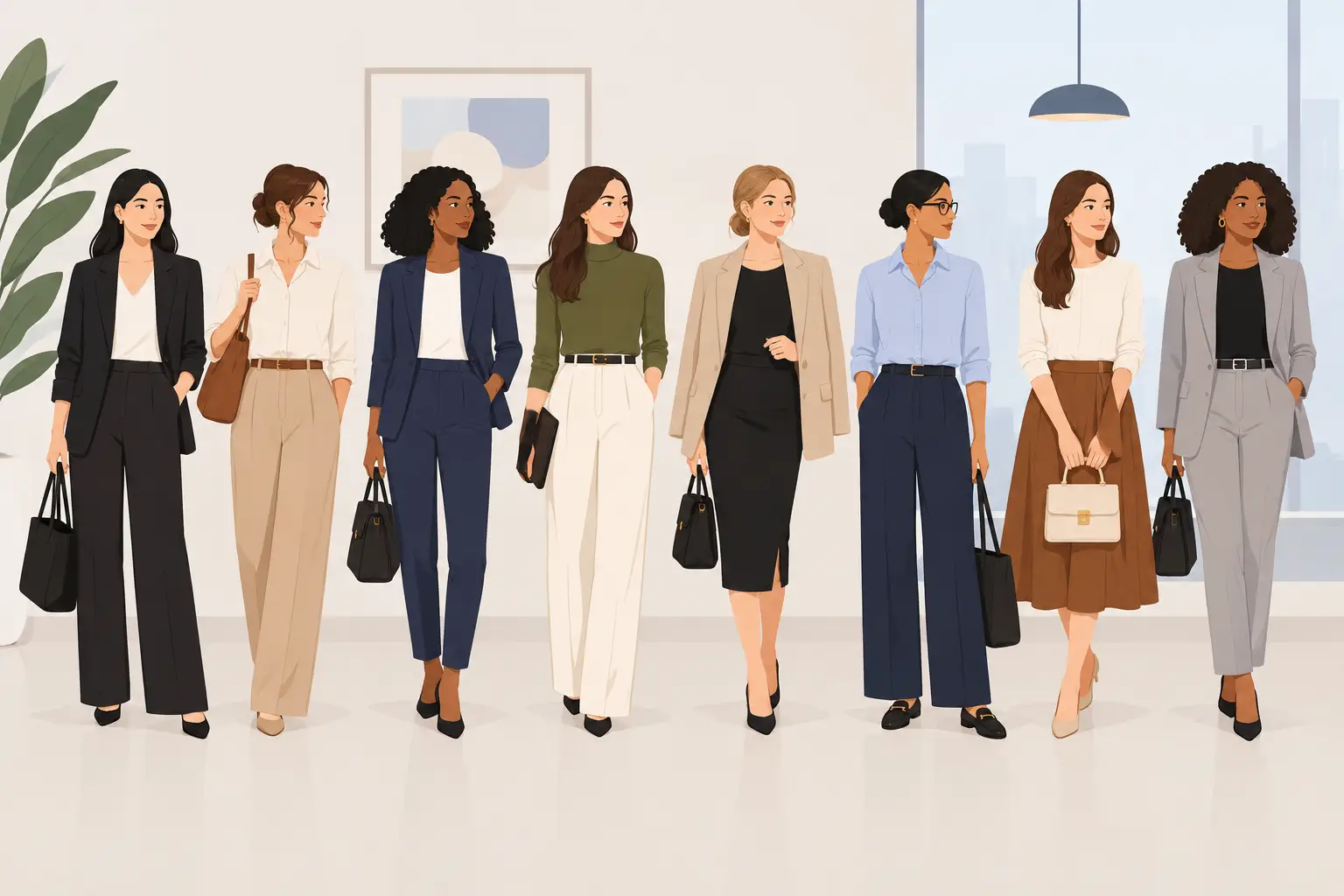
The 8:42 a.m. outfit spiral is rarely about having nothing to wear. It is usually about having too many separate pieces and no reliable way to combine them. The best outfit formulas for work solve that problem: they give you a repeatable base, then leave room for your color preferences, workplace dress code, and personal style.
A formula is not a uniform. Think of it as a shortcut for building a look that feels intentional in under five minutes. Once you know which shapes work together, getting dressed becomes less about guessing and more about choosing the version that fits your day.
Start With Your Actual Workplace
Before copying any office outfit, read the room. A creative studio, a hybrid tech team, a law office, and a client-facing sales role can all mean very different things by "professional." Notice what leaders wear on ordinary days, not just in team photos. That is usually the most useful dress-code signal.
Your calendar matters, too. A presentation, interview, on-camera call, or after-work dinner may call for a more structured layer than a desk-heavy day. Keep your formula stable and adjust one element - a blazer instead of a cardigan, tailored trousers instead of jeans, or loafers instead of sneakers.
The Best Outfit Formulas for Work
1. Tailored trousers + fitted knit + structured layer
This is the workhorse formula for days when you want to look sharp without feeling overdressed. Start with straight-leg or wide-leg trousers that sit comfortably at the waist. Add a fine-gauge crewneck, mock neck, or fitted cardigan, then finish with a blazer, cropped jacket, or polished overshirt.
The contrast is what makes it work: relaxed enough to move through a full day, but structured at the shoulders and waist. Try navy trousers, a soft ivory knit, and a camel blazer, or use a tonal approach with charcoal, gray, and black. If your office runs casual, swap the blazer for a clean jacket with shape.
2. Button-down shirt + dark jeans + loafers
Dark, clean-cut jeans can earn a place in many modern offices, but the supporting pieces need to make the choice feel deliberate. Choose a button-down with a crisp collar or a fluid fabric, then add loafers, ankle boots, or sleek flats. Tuck the shirt fully, half-tuck it, or leave it untucked only if the hem is designed to look clean that way.
This formula works particularly well for hybrid schedules and casual Fridays. Skip distressed denim, overly faded washes, and ultra-skinny cuts if you need a more polished result. A belt and simple watch or earrings add enough finish without turning the outfit into a costume.
3. Column of color + contrasting outer layer
A column of color means wearing similar shades on top and bottom, such as black pants with a black knit, chocolate trousers with a brown top, or navy denim with a navy shirt. Put a contrasting blazer, cardigan, trench, or jacket over it. The result looks pulled together quickly because the long visual line creates instant cohesion.
This is especially useful when you are unsure how to mix colors. Keep the base in a neutral that suits you, then use the outer layer to bring in lighter contrast or a seasonal color. If black drains your complexion, deep olive, espresso, charcoal, or ink navy can create the same effect with more warmth.
4. Midi dress + defined waist + practical shoe
A midi dress does most of the work for you. The key is choosing one with enough structure for your environment: a shirt dress, knit dress, wrap-inspired shape, or clean A-line silhouette tends to be more versatile than a very delicate slip style.
Define the waist with the dress cut, a belt, or a cropped layer. Then ground it with shoes you can actually walk in - loafers, low boots, block heels, or refined sneakers where appropriate. Add a blazer for a meeting, or a cardigan for a softer office. This formula is a strong option for warm weather because it avoids the bulk of extra separates.
5. Matching set + simple base layer
Matching sets are one of the fastest ways to look intentional. A blazer and trouser set is the obvious choice, but knit sets, coordinated skirt sets, and vest-and-pant combinations work too. Underneath, wear a simple tee, tank, shell, or thin knit in a color that does not compete.
The trade-off is that a matching set can feel formal if the fabric is very crisp or the fit is overly slim. Soften it with a white tee and flats, or choose a relaxed fabric such as knit, cotton twill, or a matte blend. On higher-stakes days, a sharp shoe and a clean bag bring the structure back.
6. Pencil or midi skirt + tucked-in top + one modern layer
Skirts feel current at work when the proportions are balanced. Pair a midi slip skirt with a fine knit and cropped jacket, or a straight midi skirt with a tucked-in tee and blazer. If you prefer a pencil skirt, keep the top slightly more relaxed so the silhouette does not feel dated or restrictive.
A modern layer is the reset button here. It can be a collarless jacket, an oversized blazer, a lightweight trench, or a cardigan worn buttoned as a top. Choose shoes based on the skirt length and your commute: knee boots, loafers, flats, and low heels all work when the hem and shoe create a clean line.
7. Elevated T-shirt + tailored bottom + standout accessory
For a casual workplace, a quality T-shirt is not a shortcut - it is the foundation. Choose an opaque tee with a neat neckline and sleeves that hold their shape. Tuck it into pleated trousers, a midi skirt, or dark straight-leg jeans, then add one deliberate detail: a belt, a sculptural earring, a leather tote, or a watch.
This formula depends on fit and fabric more than anything else. A stretched-out tee or thin leggings will pull the outfit toward weekend wear. A heavier cotton tee and tailored bottom make it office-ready without sacrificing comfort.
8. Wide-leg pants + close-fitting top + longer layer
Wide-leg pants offer ease, but they need balance. Pair them with a fitted knit, bodysuit, tucked-in blouse, or slim tank, then add a longer blazer or coat. The closer top keeps the silhouette defined, while the longer layer makes the proportions feel purposeful.
Pay attention to hem length. Pants that drag on the ground look messy quickly, while a hem that lands just above the shoe reads clean and considered. This is also a useful formula for travel days or long commutes because it looks polished while leaving room to move.
Make Each Formula Look Like You
The same formula can look minimal, creative, classic, or bold depending on color, texture, and accessories. Start with colors that flatter your natural contrast rather than defaulting to black because it feels safe. A cool, high-contrast palette might lean into black, optic white, cobalt, and berry. Someone with softer, warmer coloring may find camel, muted navy, olive, cream, and rust more harmonious.
Then decide where your personality goes. If you love statement pieces, keep the base formula clean and make the shoe, bag, jacket, or jewelry the focal point. If you prefer a quiet wardrobe, use texture instead: ribbed knitwear, suede, crisp cotton, subtle pinstripes, or a matte leather belt can make neutrals feel less flat.
Fit is the non-negotiable. Even a simple combination looks expensive when the shoulders sit correctly, sleeves do not bunch, and pants hit at the right length. Tailoring one pair of pants and one blazer can improve more work outfits than buying five trend-driven pieces.
Build a Five-Day Rotation, Not Five New Outfits
The easiest way to reduce outfit fatigue is to create a small rotation around your most reliable pieces. Pick two bottoms, two layers, three tops, and two pairs of work-appropriate shoes that all coordinate. You do not need every item to match every other item perfectly, but each piece should work in at least two formulas.
Planning ahead also helps you avoid the common problem of saving your best pieces for a vague future occasion. Photograph combinations you like, or use a digital wardrobe to test outfits from what you already own. SHMOT can organize your pieces, build looks around your schedule, and help you see which colors and silhouettes you reach for most.
Tomorrow morning, choose one formula before you open your closet. Start with the pants, dress, or skirt that fits best right now, add the matching structure, and let the rest be simple. Getting dressed for work should support your day, not delay it.