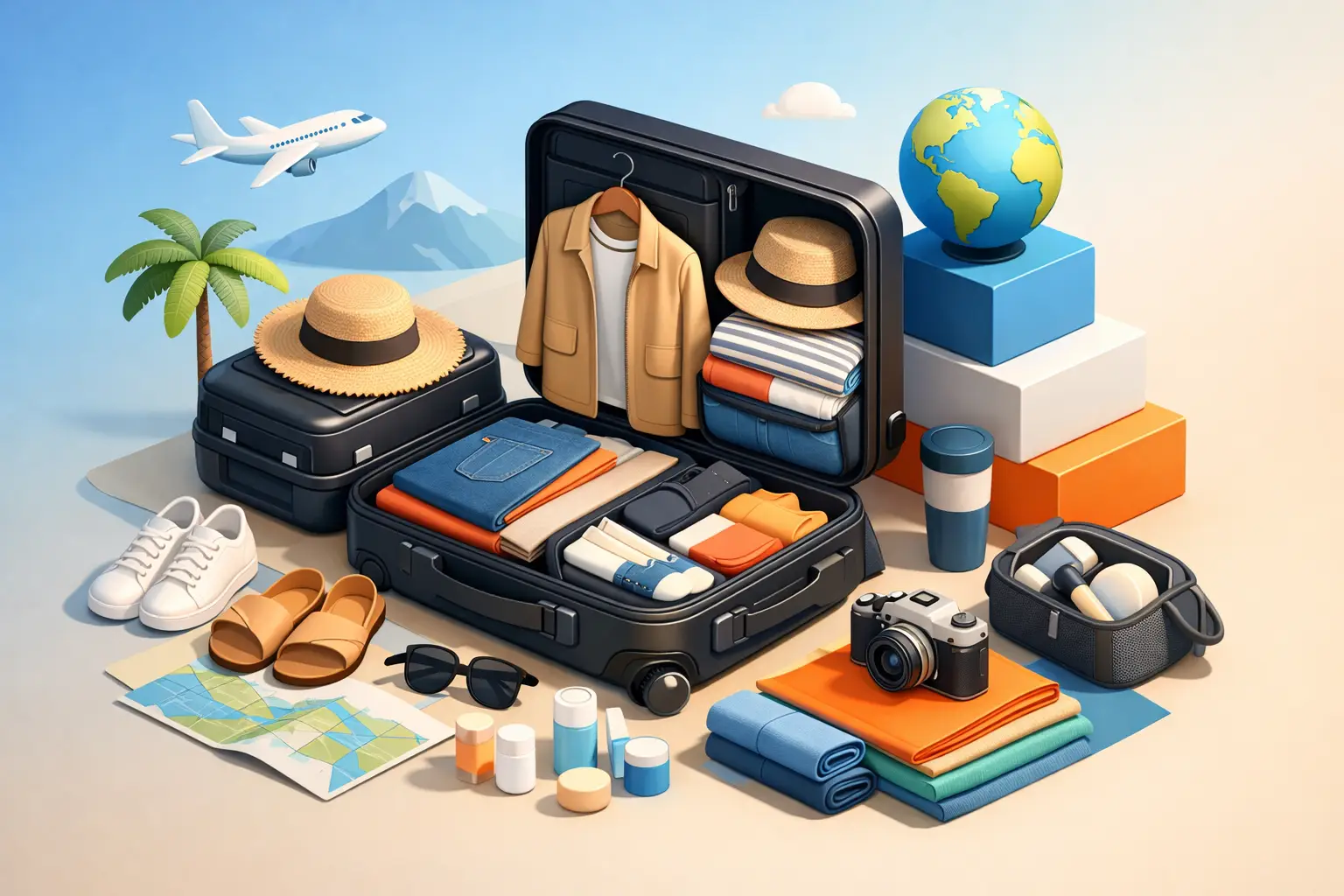
A carry-on can hold a surprising amount when every piece has a job. The real trick in how to build a travel capsule is not packing fewer clothes for the sake of it. It is packing clothes that make sense together, suit the forecast and agenda, and still feel like you when you put them on.
A good travel capsule removes the 8 a.m. hotel-room question: “What can I wear with this?” Instead of bringing separate looks for every plan, you create a small wardrobe where one jacket, two pairs of shoes, and a few reliable layers can cover most of the trip.
Start With the Trip, Not Your Closet
Before choosing a single top, define what this trip actually requires. A three-day city break, a beach wedding, a work conference, and a two-week multi-city trip need different capsule strategies. The goal is not a fixed number of items. The goal is enough options without bringing items that only work once.
Look at your itinerary and group it into outfit moments: travel days, daytime exploring, dinners, work meetings, workouts, formal events, and downtime. Then check the weather at both the start and end of your trip. A destination with warm afternoons and cool nights needs layers, even if the forecast icon only shows sunshine.
Be honest about your habits, too. If you do not wear heels at home, a pair “just in case” will probably stay in your suitcase. If you know you rewear your favorite wide-leg pants three times a week, they deserve a place. A capsule should make travel easier, not turn it into a style experiment you have to maintain.
Choose a Color Story You Can Repeat
The fastest way to make a small suitcase feel bigger is to limit the color palette. Start with two or three neutral base colors, then add one or two accent colors that work with all of them. For example, black, cream, and denim can support burgundy and soft blue. Navy, white, and tan can support red or green.
Your palette does not have to be beige to be practical. In fact, color can make repeat outfits feel intentionally different. The key is compatibility. Each top should work with at least two bottoms, and your outer layer should look right over nearly everything you pack.
This is where knowing your personal colors helps. A shade that brightens your skin and makes your eyes look clearer does more for an outfit than an extra “statement” piece. If you tend to reach for black but find it washes you out in photos, try using it for pants or shoes while choosing more flattering colors near your face.
Build Around Three Reliable Bottoms
Bottoms do the heavy lifting in a travel capsule because they are easy to repeat without anyone noticing. For many trips, three is a useful starting point: one polished option, one casual option, and one comfort-first option.
That might look like tailored black trousers, straight-leg jeans, and relaxed linen pants. For a warm-weather trip, swap the jeans for a midi skirt or tailored shorts. For colder weather, consider dark jeans, knit pants, and a skirt or dress you can style with tights.
Choose fabrics with realistic travel performance. Linen is breathable and looks great in heat, but it wrinkles quickly. That may be fine for a relaxed coastal trip and less ideal for a presentation-heavy work week. Stretch denim, ponte, knitwear, and wrinkle-resistant blends are often easier to wear repeatedly. Test whether you can sit, walk, and eat a long dinner in each piece. Comfort is part of looking put together.
Add Tops That Create Different Outfit Moods
Once your bottoms are set, add tops with range rather than packing a stack of nearly identical shirts. Aim for a mix of easy base layers and pieces that can shift the mood of an outfit.
A fitted tee, a tank, a button-down, a lightweight knit, and one dinner-ready top can create a lot of combinations without feeling repetitive. The same trousers look casual with a tee and sneakers, sharp with a button-down and loafers, and evening-ready with a silky top and jewelry.
Think about proportions while you choose. If you are bringing wide-leg pants, include at least one fitted or tuckable top. If your bottoms are slim, an oversized shirt or soft knit adds balance. Taking mirror photos of combinations before you leave is useful because it shows you which pairings truly work, not just which individual pieces look good on a hanger.
Use Layers to Handle Weather and Dress Codes
One great layer earns more space than three extra tops. A blazer, denim jacket, overshirt, cardigan, or lightweight trench can change the look of an outfit while giving you an answer to unpredictable weather.
The best choice depends on the trip. A blazer is powerful for business travel and dinners, but may feel too structured for a hiking-focused vacation. A neutral overshirt works well for casual city travel because it can function as a light jacket, an indoor layer, or a shirt on its own. For cold destinations, prioritize a warm coat you will wear in transit and build the capsule beneath it.
Try every layer over every top before packing. If a jacket only works with one outfit, it is competing for valuable space. Exceptions make sense for a special event, but label that item as event-specific so it does not distort the rest of your capsule.
Keep Shoes and Accessories Strategic
Shoes are where many carry-ons lose the battle. Limit yourself to two pairs for a short trip or three for a longer one: a walking shoe, a more polished shoe, and, if needed, a weather- or activity-specific pair. White sneakers and black ankle boots may work for a fall city trip. Sandals and comfortable sneakers make more sense for summer.
Wear the bulkiest pair on the plane. More importantly, break in every shoe before departure. A beautiful pair that gives you blisters on day one can quietly ruin an entire travel capsule.
Accessories give repeat outfits a different point of view without taking up much room. Bring a belt that works with your pants, one everyday bag, sunglasses, simple jewelry, and a scarf if the climate calls for it. Rather than packing accessories for every possible outfit, choose a small set that reflects the same color story as your clothes.
Plan Outfits Before You Pack
The most effective way to learn how to build a travel capsule is to create the outfits first, then pack the pieces that appear in them. Lay everything out, build a look for each key itinerary moment, and take photos. You will spot gaps quickly: maybe your dress has no layer for evening, or your only nice top does not work with the pants you planned.
You do not need a different outfit for every day. Repeating bottoms, outerwear, and even a favorite top is normal. What matters is that the repeat feels deliberate. Switch shoes, add a layer, change the tuck, or wear a different accessory. A black tank with trousers can look completely different under a blazer at dinner than it does with an open shirt and sneakers during the day.
A digital wardrobe can make this stage faster. If your clothing is scanned and organized, you can test combinations without covering your bed in half your closet. It also makes it easier to see whether a new travel purchase fills a real gap or simply duplicates something you already own.
Pack for Laundry, Not Every Possibility
For trips longer than a week, plan to rewear and wash instead of doubling your wardrobe. Most hotels, rentals, and cities offer some way to do laundry, and quick-drying basics can be washed in a sink if necessary. Bring enough underwear and socks to avoid creating a chore, but do not pack 14 shirts for a 14-day trip.
There are exceptions. A remote trip without laundry, a destination with extreme weather changes, or an itinerary with multiple formal events may require more pieces. In those cases, keep your core palette intact and add only the specialty items you genuinely need.
Before closing your suitcase, do one final edit. Remove the item you hope you will wear but have not styled into an outfit. Remove the backup that does the same job as something better. Leave space for souvenirs, an unplanned purchase, or simply a less stressful return journey.
Your travel capsule should make getting dressed feel fast, not restrictive. Use SHMOT to scan your wardrobe, test outfits against your personal colors, and plan your looks before the suitcase comes out.