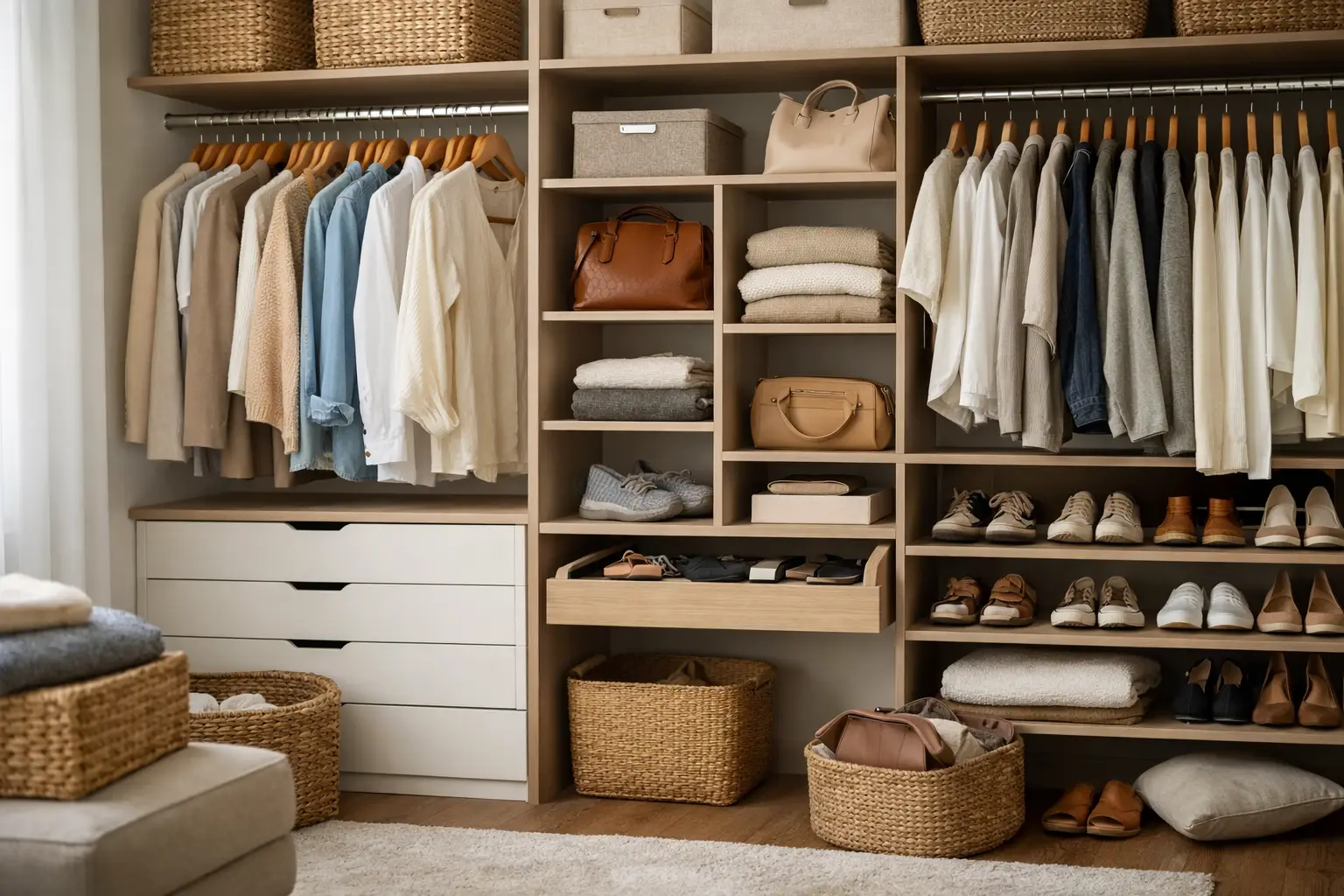
The problem with most closets is not a lack of space. It is a lack of visibility. Your favorite black pants disappear behind items you never wear, a great jacket gets buried under dry-cleaning bags, and getting dressed becomes a daily search mission. Knowing how to organize a closet is really about building a system that lets you see your options, reach for them easily, and make better outfits with less effort.
This does not require matching containers, a full Saturday of folding, or a minimalist wardrobe. It requires a setup built around your real routine: where you go, what you wear most, and what makes you feel like yourself.
Start with your actual lifestyle, not an ideal one
Before moving a single hanger, think about the last two weeks. What did you wear to work, class, errands, dinners, the gym, or a weekend trip? The answers should shape the closet.
If you work remotely but go out three nights a week, your going-out clothes should not be stored on the highest shelf while old office shirts take up prime hanging space. If you wear jeans four times a week, they deserve an easy-to-reach zone. A closet should support the person getting dressed in it now, not the version of you who might someday attend more formal events.
It also helps to notice what is missing. Maybe you own five dressy tops but no comfortable layer to wear with them. Maybe your closet is full, yet every morning you reach for the same three outfits. Organization makes those gaps visible, which can stop random shopping and make future purchases more useful.
Empty enough to see the whole picture
A full reset works best when your closet feels chaotic, you have moved recently, or you honestly do not know what you own. Take everything out and sort it on the bed or floor. Seeing each category together makes duplicates and neglected pieces obvious.
But do not force a total empty-out if it will derail you. If you only have 30 minutes, organize one category instead: T-shirts, jeans, workout gear, shoes, or bags. A finished section is more valuable than an ambitious project that leaves your bedroom covered in clothing for a week.
As you sort, make four simple groups: keep and wear, keep but store elsewhere, repair or tailor, and let go. Be honest about the difference between a piece you love and a piece you feel guilty about.
Ask better questions than “Does it still fit?”
Fit matters, but it is not the only test. Try asking: Would I choose this over what I usually wear? Does this color work with the rest of my wardrobe? Can I name an occasion for it in the next six months? Does it feel good when I put it on?
A special-occasion item can stay even if you do not wear it weekly. The goal is not to reduce your closet to basics. The goal is to stop everyday pieces from competing with clothing that has a different purpose.
For uncertain items, create a temporary maybe section. Put those pieces in a separate box or at the far end of the rack for 30 to 60 days. If you do not reach for them, your answer is probably clear.
Build closet zones that match how you get dressed
The easiest way to organize a closet is by category first, then by function. Keep all jeans together, all knitwear together, and all jackets together. Within those categories, put your most-used pieces in the easiest places to grab.
Your eye-level zone is premium real estate. Use it for the items you wear weekly: work staples, favorite tops, everyday dresses, denim, or the layers you rely on most. Put occasionwear, off-season clothing, and sentimental pieces higher up or farther back.
A practical closet often has these zones:
- Daily clothes within immediate reach
- Work, school, or polished outfits grouped together
- Activewear and lounge pieces in drawers or bins
- Event clothing in a separate section
- Off-season items stored up high, under the bed, or in labeled containers
The exact categories depend on your life. Someone who works in a creative office may want a strong blazer and trouser section. Someone who travels often may reserve a shelf for packing cubes, swimwear, and travel layers. Use the categories that make getting dressed faster, not the categories that look best in a closet makeover video.
Choose a sorting method you can maintain
Once categories are set, sort in the way your brain naturally scans. For many people, color order is the fastest choice because it makes outfits easier to spot. You can move from light to dark, or group colors in a loose spectrum. Seeing all your whites, blues, reds, and blacks together also reveals whether your wardrobe has enough range to mix and match.
Another option is to sort by garment type and then by dressiness. For example, keep casual button-downs together, then place sharper shirts next to blazers and tailored pants. This works well if your days move between casual and professional settings.
Do not over-organize to the point that putting laundry away becomes annoying. If every T-shirt has to live in an ultra-specific color-and-sleeve-length sequence, the system may collapse after one busy week. Simple systems survive real life.
Use storage tools only where they solve a problem
Uniform slim hangers can save space and stop clothes from slipping, but they are optional. The same goes for bins, dividers, and shelf organizers. Buy tools after you know what you need, not before.
Use clear or labeled bins for small items that easily disappear, such as belts, scarves, swimsuits, tights, and workout accessories. Drawer dividers help if socks and underwear become one messy pile. Shelf dividers can keep stacks of jeans or sweaters from toppling over.
For folded items, think in terms of visibility. Deep stacks hide the pieces at the bottom. Vertical folding in drawers or shallow bins lets you see more at once. Sweaters can be folded to protect their shape, while dresses, jackets, shirts, and pants often hang better. Heavy knits may stretch on hangers, so give them shelf space if possible.
Make shoes and accessories easy to use
Shoes tend to become closet clutter because they do not fit neatly into the same system as clothing. Keep your current-season, most-worn pairs visible near the floor or on a dedicated rack. Store formal shoes and rare-use styles elsewhere, ideally in clear boxes or labeled containers so you can find them without opening everything.
Bags work best when they are stuffed lightly to hold their shape and stored upright. Keep everyday bags where you can grab them on the way out. Jewelry, sunglasses, and belts should have one dedicated home, even if that home is simply a small tray in a drawer. The goal is to eliminate the last-minute hunt for an accessory that finishes the look.
Create an outfit-ready section
A well-organized closet should do more than store clothes. It should help you make decisions. Reserve a small section of rail space, a hook, or a valet rod for tomorrow's outfit. On Sunday, you can pull a few likely looks for the week based on your calendar and the weather.
This is especially useful when you have an early meeting, a date after work, a presentation, or travel coming up. Pair the full look, including shoes and outerwear, rather than assuming it will come together in the morning. You will quickly catch issues like a missing layer, an uncomfortable shoe choice, or colors that do not work as well together as you expected.
If you struggle to remember strong combinations, photograph outfits you like or save them in a digital wardrobe. A tool like SHMOT can help you catalog pieces, test outfit ideas, and plan looks around your week, so your organized closet becomes a working styling system instead of a cleaner place to store clothes.
Keep the system from drifting back
Closet organization is not a one-time project. It needs a small reset rhythm. Put clean laundry away by category rather than dropping it onto a chair. Return items to their zones after trying them on. At the end of each season, move weather-specific clothes and check what you actually wore.
A useful rule is one in, one review. When you buy a new sweater, shirt, or pair of shoes, take a quick look at the similar pieces already in your closet. You do not always need to remove something, but you should know whether the new item fills a gap, upgrades an old favorite, or repeats a pattern you already have too much of.
Your closet does not need to look like a store. It needs to make your next outfit feel obvious. Start with one category today, make the pieces you love easiest to reach, and let the system earn its place in your morning routine.