A formal invitation can create instant outfit panic, especially when it gives you one vague word and no examples. Figuring out what to wear to a formal event is less about buying the most expensive thing you can find and more about reading the dress code correctly, getting the fit right, and choosing details that look intentional.
The goal is simple: look polished enough for the room without feeling like you are in costume. Start with the invitation, then work from the most formal interpretation of the event downward.
What “formal” actually means
“Formal” is an umbrella term, not one exact outfit. A black-tie wedding, an awards dinner, a fundraising gala, and a formal work event may all use the word, but the expected looks can differ.
First, look for a specific dress code on the invitation or event page. “Black tie,” “black tie optional,” “creative black tie,” and “cocktail attire” each call for something different. If it only says formal, consider the venue, start time, host, and occasion. An evening event at a ballroom or historic venue usually leans dressier than a daytime ceremony at a country club.
When you are stuck between two options, wear the more refined one. Being slightly overdressed is usually more comfortable than spending the night wishing you had skipped the casual shoes or lightweight shirt.
Decode the formal dress code before you get dressed
White tie: the rarest and most traditional
White tie is the highest level of evening dress and is usually stated clearly. Think state dinners, very traditional galas, and certain formal balls. Classic menswear calls for a black tailcoat, white bow tie, white waistcoat, and formal black shoes. Floor-length evening gowns are the standard for dresses.
This is not the place to improvise with a regular black suit or a short dress. If the invitation says white tie, follow it closely or consider renting the required pieces.
Black tie: elevated eveningwear
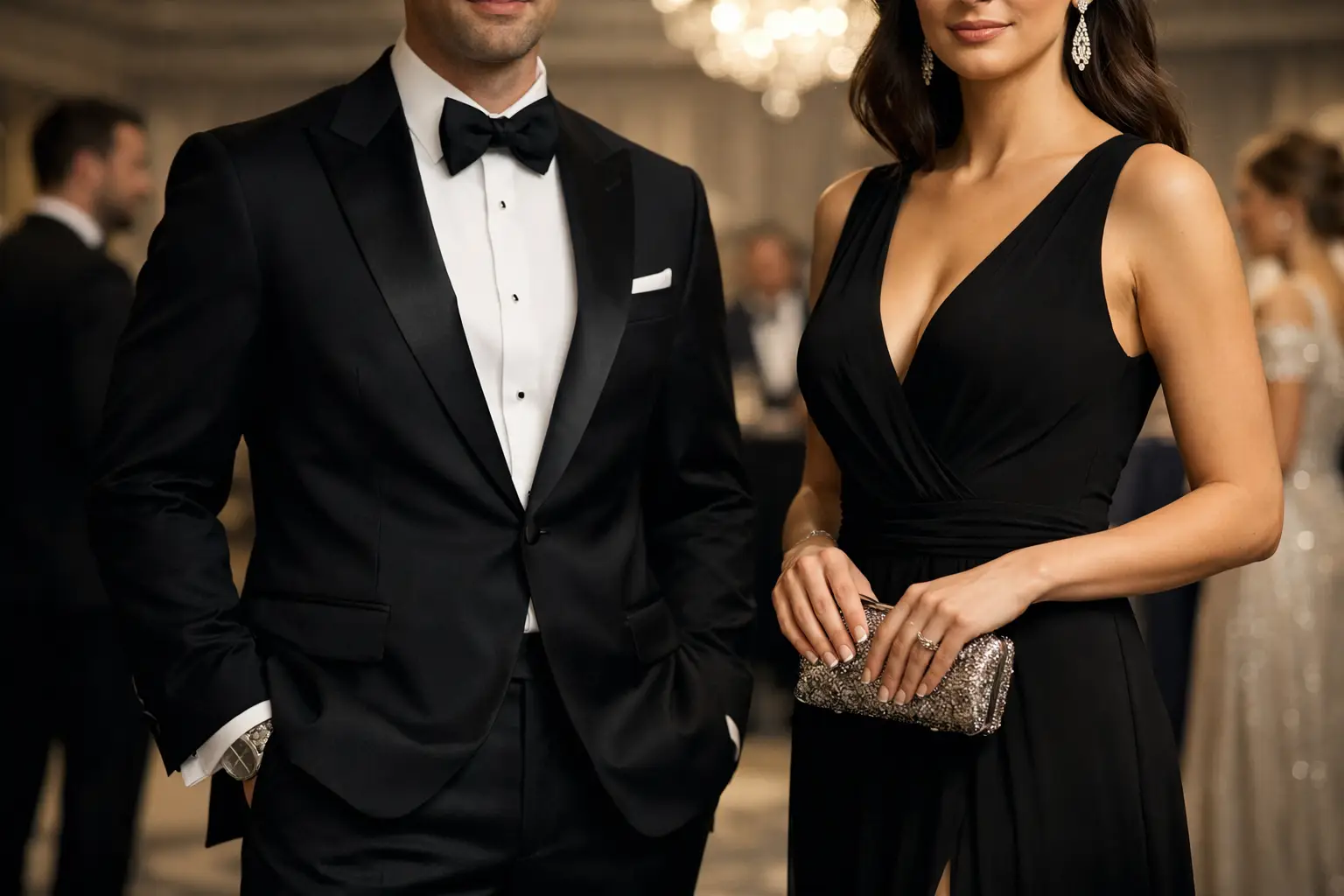
For most people, black tie is the dress code they mean when they ask what to wear to a formal event. A tuxedo with a black bow tie, crisp white dress shirt, and polished black shoes is the traditional choice. A dark midnight-blue tuxedo also works beautifully under evening lighting.
For dresses, choose a floor-length gown or a highly polished midi or full-length formal dress, depending on the crowd and venue. Satin, crepe, silk, velvet, chiffon, and structured tailoring all fit the mood. A sharp tuxedo-style suit can be equally appropriate when styled with formal shoes, refined jewelry, and a sleek bag.
Avoid treating black tie as an all-black requirement. Deep emerald, burgundy, navy, plum, or a flattering jewel tone can look striking. The key is the fabric, construction, and finish. A casual knit dress in black is still casual; a well-cut crepe gown in a rich color is formal.
Black tie optional: polished, not necessarily tuxedo-only
Black tie optional gives you room to choose. A tuxedo is welcome, but a dark, well-tailored suit is also acceptable. Choose navy, charcoal, or black, add a white dress shirt, a conservative tie or bow tie, and leather dress shoes.
For dresses and formal separates, think evening-ready rather than everyday. A long dress is a safe choice, but a tailored jumpsuit, formal midi dress, or elegant suit can work. Add one elevated element, such as a structured clutch, dressy heel, or statement earring, rather than piling on every accessory at once.
Creative black tie and formal cocktail attire
Creative black tie keeps the polished base but allows more personality. You might wear a velvet dinner jacket, a tuxedo in a deep color, metallic accessories, or a gown with an architectural shape. Keep one part classic so the look still reads formal.
Formal cocktail attire is a step below black tie. A knee-length or midi cocktail dress, dressy suit, or tailored jumpsuit works well. For menswear, a dark suit is usually right. This is where a clean, fashion-forward look can shine, but sneakers, distressed denim, graphic tees, and casual sandals remain out of place.
Build your look from fit first
A great fit will carry an outfit further than a designer label. Shoulders should sit where your shoulders naturally end. Jacket sleeves should not swallow your hands, trouser hems should not bunch heavily at the shoe, and dress straps should stay in place without constant adjustment.
Try on the full look at least a few days before the event. Sit down, walk, lift your arms, and check it in different lighting. Formalwear often looks perfect standing still in a mirror but becomes uncomfortable after one dinner, one dance, or one long ride across town.
If you have time for one alteration, prioritize the area that affects the silhouette most. That may be hemming pants, taking in a waist, shortening straps, or adjusting jacket sleeves. Small tailoring changes make clothing look chosen for you rather than borrowed for the night.
Choose colors that look intentional on you
Black is reliable, but it is not your only formal option. The best color is one that works with your skin tone, hair, eye color, and overall contrast. If black makes you look washed out, try navy, espresso, charcoal, dark teal, or a jewel tone instead.
For a quieter event, stay within a refined palette: black, navy, gray, deep green, wine, chocolate, silver, or soft champagne. For a celebratory gala or creative black-tie party, a bright red, cobalt, metallic finish, or printed formal fabric can make sense. It depends on how expressive the host, venue, and guest list tend to be.
White, ivory, and very pale cream deserve extra caution at weddings. Even when the dress code is formal, those shades may compete with the couple unless the invitation specifically invites them.
Your accessories should support your color choice. Warm metals often complement warm, earthy shades; silver and platinum tones can sharpen cool jewel colors and black. There are no rigid rules, but coordinating undertones makes the whole outfit feel more considered.
The finishing details matter more than you think
At a formal event, shoes and grooming can change the entire read of an outfit. Clean, polished leather shoes, classic pumps, refined sandals, or formal flats are safer than casual footwear. Make sure you can walk confidently in them. A lower heel with a stable base usually beats a dramatic shoe that leaves you limping before dinner.
Keep bags compact. A clutch, small shoulder bag, or sleek mini bag is more practical than an oversized tote. Choose one focal point for jewelry: statement earrings, a watch, a necklace, or a bold cuff. If your outfit has sparkle, texture, or a dramatic neckline, quieter accessories often look better.
For grooming, aim for deliberate rather than overdone. Steam or press your clothing, remove lint, check for loose threads, and make sure your nails and hair feel finished. Bring fashion tape, blotting papers, a safety pin, and a backup pair of comfortable shoes if you will be out for hours.
Plan around the event, not just the photo
A formal look has to survive real life. Consider the weather, transportation, coat check, venue temperature, and how long you will be standing. A gown with a long train may look dramatic in photos but be difficult at a crowded reception. A fitted blazer looks sharp, but only if you can comfortably eat and move in it.
If you are building an outfit from your existing wardrobe, pull every likely piece out at once: formal shoes, outerwear, bag, jewelry, and underlayers included. Photograph the combinations in daylight and evening light. You will spot mismatched blacks, sheer fabrics, awkward hems, and accessory overload much faster on camera.
SHMOT can make that process faster by scanning the pieces you own, matching colors to your personal palette, and letting you preview formal-event combinations before you commit. The best outfit is rarely hidden in one new purchase. Often, it is a better combination of pieces already in your closet.
Choose the version of formal that lets you enter the room feeling composed, comfortable, and like yourself. Take a selfie, scan your wardrobe, and let your AI stylist help you plan the look before event day.