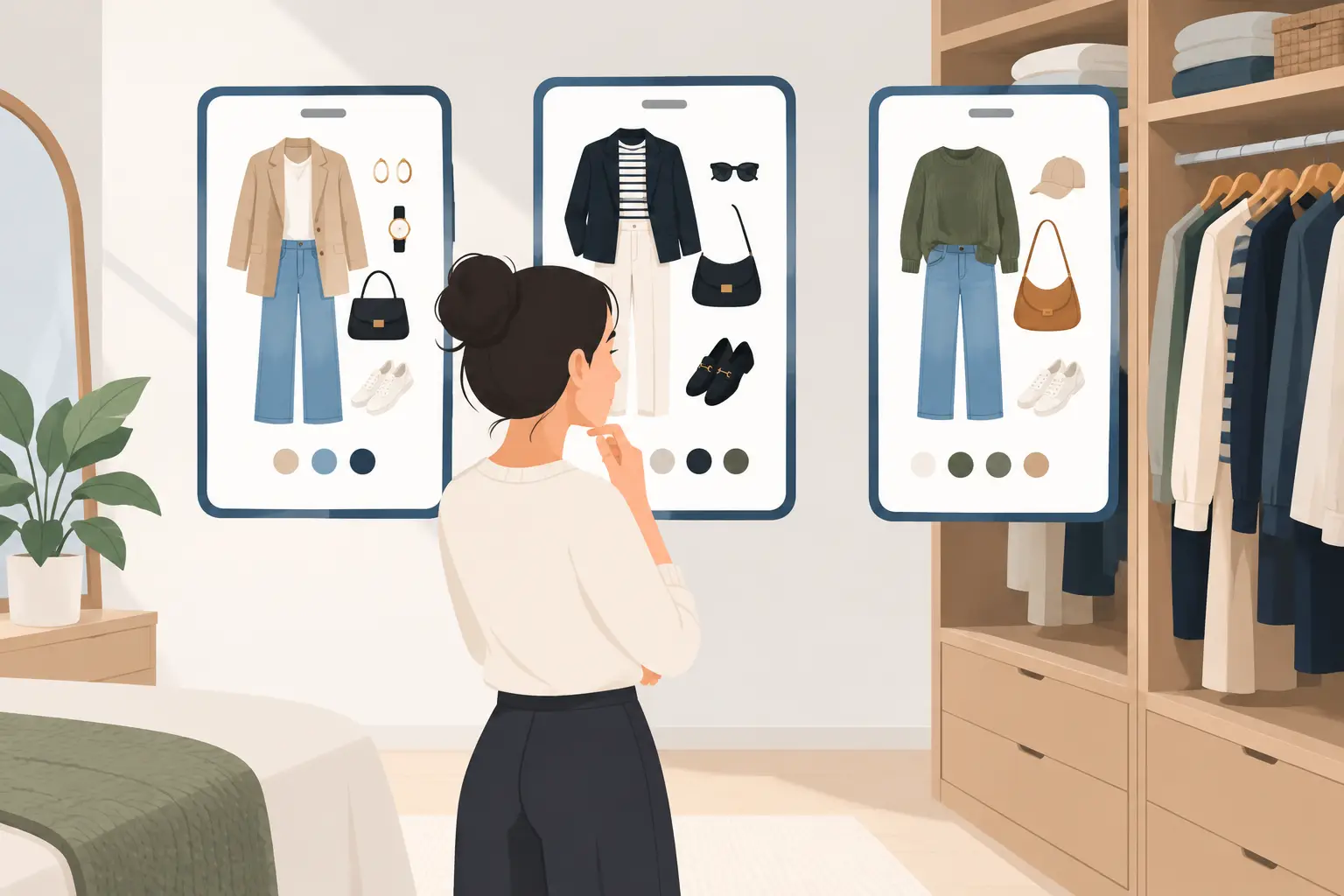
Your closet can be full and still leave you staring at it at 8:12 a.m. with nothing that feels right. A useful outfit planner comparison is not really about choosing the app with the most features. It is about finding the system that turns your actual clothes, your personal coloring, and your real schedule into decisions you can use.
Some planners are great at making a digital closet. Others excel at inspiration, packing lists, or daily outfit prompts. The right choice depends on where getting dressed breaks down for you. If you already know your colors and own a well-organized wardrobe, you may need a quick calendar tool. If your closet feels disconnected from what flatters you, planning alone will not solve the problem.
What an Outfit Planner Should Actually Do
An outfit planner has one job: reduce the gap between owning clothes and wearing them well. That sounds simple, but the path matters. A strong planner should know what you own, help you combine it for a specific moment, and make those choices easy to revisit.
The best tools move beyond a folder of clothing photos. They answer practical questions: What works for a client presentation on Thursday? Which shoes make this dinner outfit less formal? What can I pack for four days when the forecast changes? Can I wear this jacket again without repeating the same look?
That means judging planners by workflow, not by a long feature checklist. Look for the point where an app either saves you time or asks you to do more admin than you can sustain.
Outfit Planner Comparison: Five Features That Matter
1. Wardrobe capture and organization
Every planner starts with your clothes. The basic approach is manual: photograph each item, crop it, name it, and assign categories. This gives you control, but digitizing even a modest closet can become a weekend project.
More automated planners identify clothing from a flat-lay photo and separate items for you. That can make a big difference if you have piles of clothes to catalog, especially when you want a wardrobe you will keep updating. Still, check the editing options. Automated extraction is helpful only if you can quickly fix an item that is mislabeled or poorly cropped.
Organization should also reflect how you dress. Categories for color, season, occasion, fit, and fabric are more useful than a generic photo gallery. A black blazer becomes much easier to use when you can find it under workwear, lightweight layers, and evening options.
2. Outfit generation versus outfit inspiration
This is one of the biggest differences in any outfit planner comparison. Inspiration platforms show you looks that may be stylish but have no connection to your closet. They are useful for ideas, shopping research, and saving a mood. They cannot tell you whether you own the pieces needed to recreate the look.
A true wardrobe-based generator builds from digitized items you already have. It should let you enter an occasion, dress code, weather condition, or style direction and return combinations from your own wardrobe. For example, “creative office, 65 degrees, walking commute” is much more useful than simply selecting “work.”
There is a trade-off. Automated suggestions can be safe if the app only pairs obvious basics. The stronger systems give you a starting outfit, then let you swap individual pieces, save versions, and steer the result toward more polished, relaxed, bold, or minimal. You stay in control while avoiding the blank-page feeling of getting dressed from scratch.
3. Personal color and fit context
Most outfit apps can recognize that a shirt is blue. Far fewer can help you decide whether that particular blue supports your features. This is where a generic planner and a personal styling system begin to separate.
Color analysis can account for visible traits such as skin tone, hair color, eye color, contrast, and overall seasonal palette. Used well, it does not dictate a tiny set of approved shades. It gives you a clearer way to choose between similar options: the navy that sharpens your face versus the icy blue that makes you look tired, or the warm cream that works better than stark white.
Fit needs similar context. A product photo or a flat garment image cannot show how an outfit will read on your body. Virtual try-on tools are valuable because they let you preview proportion, color placement, and overall balance before you commit to a look. They are not a replacement for checking comfort or fabric movement in a mirror. Think of them as a fast visual filter, especially when you are deciding between multiple combinations.
4. Calendar planning for real life
Saving outfits is useful. Assigning them to the week is better. The calendar is where an outfit planner becomes a practical routine instead of another app you open when you are bored.
Look for a planner that lets you build around upcoming events, work days, travel, laundry, and repeat wear. Planning Monday through Friday in one sitting can prevent the familiar pattern of wearing your favorite outfit early in the week, then scrambling when a more important event arrives.
Calendar planning also reveals wardrobe gaps more honestly. If every work outfit relies on one pair of trousers, that is useful information. If your planned looks repeatedly need a neutral layer you do not own, you can shop with a reason instead of buying another item that only works with one idea in your head.
For frequent travelers, this feature is especially helpful. Plan outfits by day, see which pieces repeat, then pack only what earns its place. A good planner makes a carry-on feel more capable, not more restricted.
5. Feedback that improves your next choice
Some apps create looks and stop there. Better ones help you learn from what worked. Ratings, saved favorites, wear history, and notes can show patterns over time. Maybe you consistently love high-contrast outfits but keep saving muted ones because they look good on a flat lay. Maybe your most-worn pieces are not your expensive purchases but the simple layers that connect everything else.
The goal is not to turn style into a scorecard. It is to spot the difference between clothes you admire and clothes you reach for. That distinction helps you edit, shop, and plan with more confidence.
Which Type of Planner Fits Your Routine?
If your main issue is clutter, start with a wardrobe organizer. It will help you see what you own and reduce duplicate purchases. Choose one with quick capture, flexible filters, and easy editing rather than the most decorative interface.
If you already organize your wardrobe but lose time every morning, prioritize outfit generation and a calendar. You need fewer saved images and more occasion-ready combinations. Make sure the tool can handle the details that shape your day, including weather, dress codes, and how formal you want to look.
If you often buy colors that do not feel right once you get home, personal color guidance should be central. A planner that understands your coloring can make outfit suggestions more consistent and help you judge new pieces before they become closet clutter.
If visual confidence is the missing piece, look for virtual try-on. It is particularly useful when styling unfamiliar proportions, combining statement pieces, or getting ready for photos and events. Just keep expectations realistic: use it to compare options, then rely on real-world comfort and fit for the final call.
The most complete option combines these pieces in one flow: scan your features, digitize your clothes, build outfits, preview them, and place them on your schedule. That setup reduces the friction between a good idea and a wearable look. SHMOT is designed around that connected process, so your color palette, wardrobe, outfits, and weekly plans can inform one another rather than live in separate tools.
Test an Outfit Planner Before You Commit
A free trial or credit-based version is enough to run a useful test. Add a small but representative group of clothes: a few tops, bottoms, layers, shoes, and one outfit for an event. Then give the app a real assignment you will face this week.
Ask it to build three looks for a specific scenario, such as a casual office day followed by dinner. Notice how much setup is required, whether the suggestions feel like you, and how quickly you can change a piece you dislike. If you cannot get to a wearable answer in a few minutes, the planner may create more friction than it removes.
Also test the return visit. Open it the next day and see whether it helps you make a new decision without repeating the same work. The planner worth keeping is not the one that impresses you once. It is the one you reach for when time is short and you still want to look considered.
Start with one week, plan around the moments that matter, and let the outfits you actually wear teach you what your wardrobe needs next.