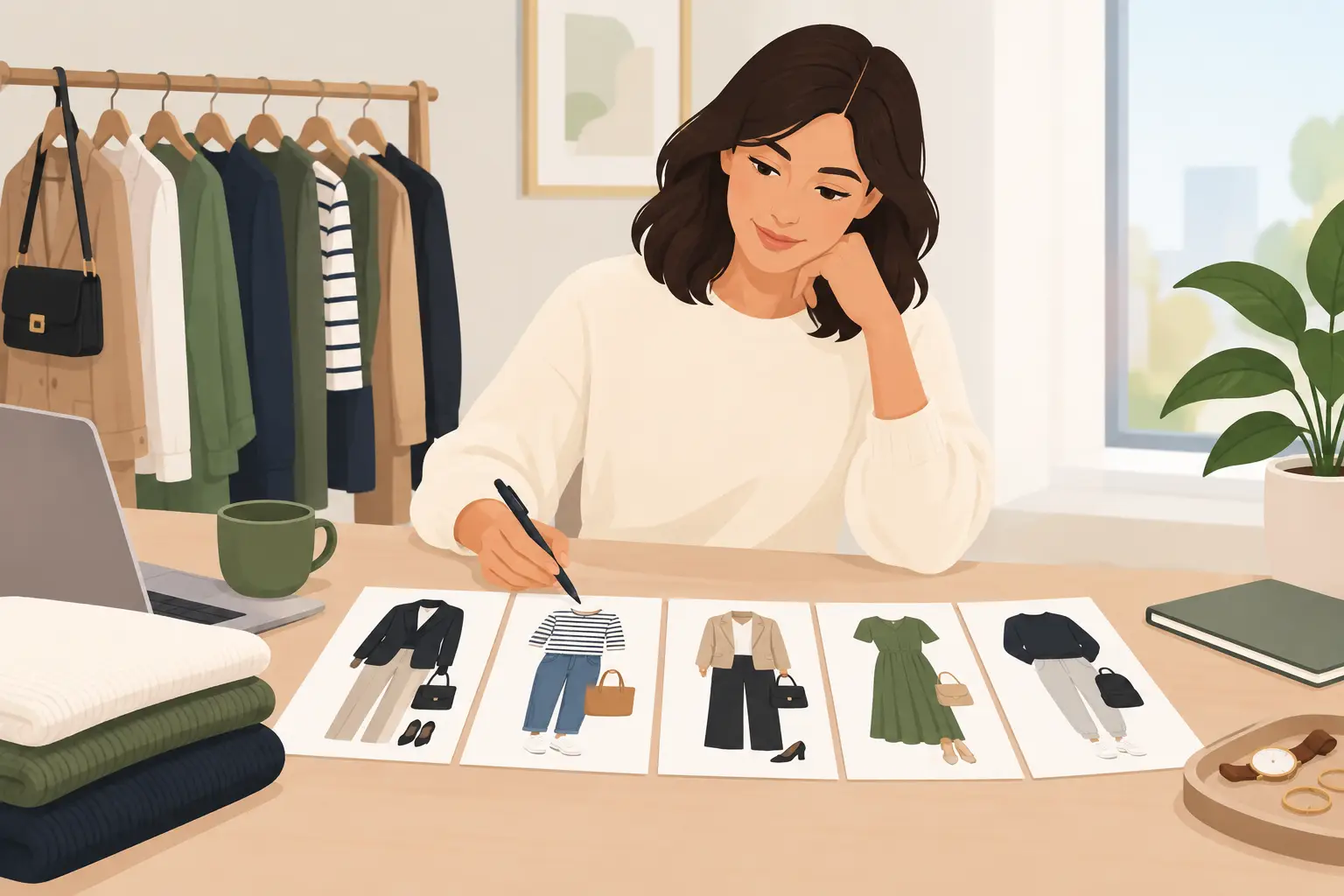
A packed closet can still leave you standing in front of the mirror at 8:12 a.m., late for work and convinced you have nothing to wear. This outfit planning guide replaces that daily scramble with a simple system: start with your actual schedule, work from clothes you already own, and make a few decisions before the pressure is on.
The goal is not to wear a different look every day or create a capsule wardrobe that feels too strict. It is to make getting dressed faster while still looking like yourself. A good plan leaves room for mood changes, weather shifts, and last-minute invitations. It just makes the easy choice a better one.
Start with the week you actually have
Planning outfits around an imaginary version of your life is how you end up with beautiful looks that never leave the hanger. Open your calendar and scan the next seven days before you look at a single shirt.
Mark anything that changes how you need to dress: office days, presentations, classes, dinners, gym sessions, dates, travel, family events, laundry day, and weather changes. A Tuesday with meetings and drinks after work needs a different kind of outfit than a work-from-home Wednesday followed by a grocery run.
Then give each day a simple dress code. Think polished casual, office-ready, active, relaxed, or going out. This is more useful than trying to define every outfit from scratch. You are creating constraints, and constraints make styling easier.
Build around your highest-stakes moments
Plan the looks with the most pressure first. That may be an interview, a client presentation, a first date, a birthday dinner, or an event where photos are likely. Choose something you have worn successfully before if confidence matters more than experimentation.
For example, if you have a Thursday presentation, start with the trousers or skirt that always fits well, add a top in a color that brightens your face, and finish with shoes you can walk in without thinking about them. The outfit does not need to be loud. It needs to let you focus on the room, not your sleeves, hemline, or shoe pain.
Use color as your fastest filter
When every item is technically an option, outfit planning takes forever. Personal color gives you a practical shortcut. Pieces close to your face have the most impact, so begin with tops, jackets, dresses, scarves, and makeup tones that make your skin look clear and your eyes look more defined.
You do not need to wear only colors from one palette. Black can work. Bright colors can work. The question is placement and balance. If a color feels harsh near your face, try it as pants, a bag, or shoes instead. Add a more flattering color on top to soften the effect.
A reliable weekly formula is to choose two or three core neutrals, then repeat a small group of accent colors. For instance, navy, cream, and denim can carry a week of outfits, while soft red, sky blue, and silver accessories stop the looks from feeling repetitive. Repeating colors across the week also makes packing, laundry, and getting ready feel more organized.
If you are unsure which colors consistently suit you, a selfie-based color analysis can make the choice much clearer. SHMOT can identify the visible features that shape your palette, then help you build outfits around colors that look intentional on you rather than just attractive on a rack.
Create outfits from anchors, not random pieces
An anchor is the one item that gives an outfit its direction. It might be wide-leg jeans, a structured blazer, a printed skirt, clean sneakers, or a favorite leather jacket. Start there, then build the rest of the look to support it.
This avoids the common mistake of pulling five interesting items together and hoping they become an outfit. Most strong outfits have one focal point and supporting pieces that create shape, contrast, or texture.
Try these combinations when you need a quick starting point:
- Tailored anchor: Pleated trousers, a fitted tee or knit, loafers, and one structured layer. This works for office days that are not fully formal.
- Denim anchor: Straight-leg jeans, a color-focused top, and a sharper shoe or jacket. It is casual, but it does not look accidental.
- Statement anchor: A bold shirt, skirt, or jacket paired with quieter basics in similar undertones. Let one piece do the talking.
- Comfort anchor: Leggings, relaxed pants, or a soft matching set elevated with clean outerwear, jewelry, or a purposeful sneaker.
The best formula depends on your workplace, body preferences, climate, and lifestyle. A blazer may make one person feel powerful and another feel like they are wearing a costume. Keep the structure, but choose the version that feels natural to you.
Plan repeats on purpose
Repeating clothes is not a styling failure. It is how a wardrobe becomes useful. The difference between looking repetitive and looking intentional is variation.
Wear the same dark pants twice in one week, but change the silhouette on top. Pair them with a fitted knit and boots on Monday, then a relaxed button-down and sneakers on Friday. Repeat a jacket with different colors underneath. Use one reliable shoe across several outfits if it works with the week’s proportions.
This approach also shows you which items are carrying your wardrobe and which ones are taking up space without earning it. If you consistently avoid a piece because it is uncomfortable, hard to match, or a color that does nothing for you, that is useful data. Do not keep forcing it into the plan just because you paid for it.
Try every planned look before the morning rush
You do not need a full fashion show on Sunday night. But for any outfit involving new combinations, try it on once. Check the fit when you sit, walk, and raise your arms. Look at it in daylight if possible, not only in bedroom lighting.
Take a quick mirror photo. Photos reveal proportion problems that a mirror can hide: a jacket that cuts you in the wrong place, pants that bunch at the ankle, or a shoe that makes the outfit feel heavier than intended. They also help you remember combinations you liked.
Virtual try-on can be useful here, especially when you want to compare layers, colors, or outfit directions without changing clothes ten times. Treat it as a decision tool, not a replacement for checking real-life fit and fabric movement.
Prepare the details that ruin good plans
An outfit is only ready when the supporting details are ready. Check whether the shoes are clean, the bag fits what you need, the coat works with the forecast, and the jewelry or belt is where you expect it to be. If an outfit needs a specific bra, undershirt, or pair of socks, place those with it.
For travel or early mornings, put complete looks together in one place. Folding every item into separate piles is enough. You do not need matching hangers or a perfectly aesthetic closet to make the system work.
Also plan one backup look. This is your answer for unexpected rain, a coffee spill, a change in temperature, or the morning when the outfit you loved three days ago suddenly feels wrong. Your backup should be comfortable, reliable, and built from items you already know fit.
Review what worked, not just what looked good
At the end of the week, notice the outfits you reached for easily. Did certain colors get compliments? Did one pair of shoes make every outfit more useful? Did you avoid a planned look because it felt too formal, too fussy, or unlike you?
A great outfit earns its place by doing more than looking good in a photo. It should fit your day, feel good for the hours you wear it, and make you more confident when you walk out the door. Keep building from those wins.
Set aside ten minutes this weekend, check your calendar, and plan three outfits before Monday. That small head start can make the whole week feel more like yours.