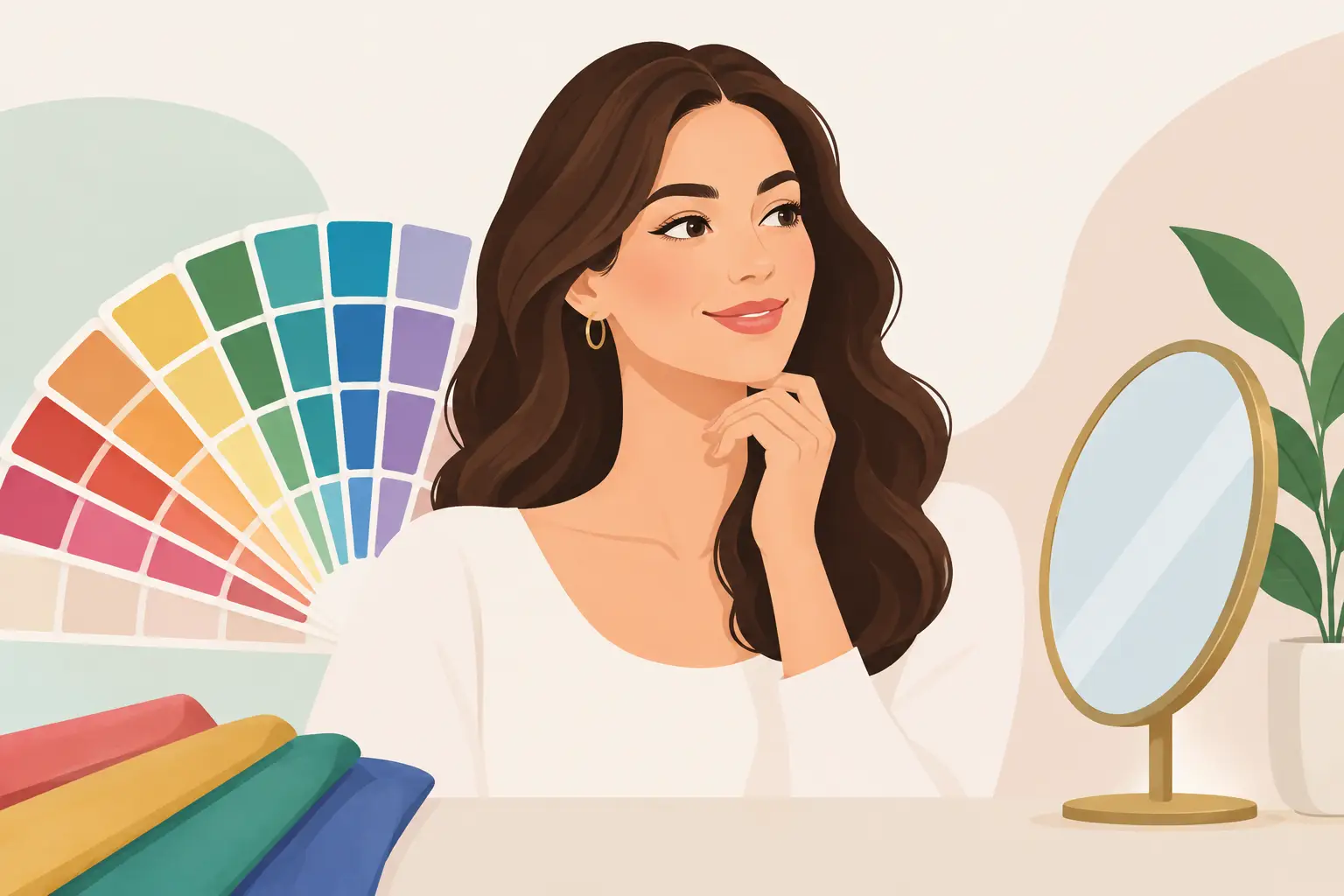
You can wear an expensive outfit and still feel slightly off if the color drains your face. The question, what colors make me glow, is really about finding shades that make your skin look clearer, your eyes more noticeable, and your overall look more awake before you add makeup, accessories, or a filter.
The answer is not one universal “best color.” It comes from the relationship between a color and your visible features: your skin’s undertone, hair depth, eye color, and natural contrast. Once you recognize that relationship, getting dressed gets faster. You stop buying colors that only look good on the hanger and start reaching for pieces that make you look like yourself on a very good day.
What colors make me glow? Start with undertone
Your skin tone can change with sun exposure, but your undertone stays relatively consistent. It is the subtle temperature beneath the surface of your skin, and it usually falls into three broad groups: warm, cool, or neutral.
Warm undertones often look especially fresh in colors with yellow, golden, or earthy bases. Think olive, moss, camel, cream, tomato red, coral, warm peach, and rich chocolate brown. These shades tend to echo the warmth already present in the skin instead of creating a gray or washed-out effect.
Cool undertones often shine in blue-based, rosy, and jewel-like colors. Sapphire, cobalt, emerald, berry, raspberry, true fuchsia, icy pink, charcoal, crisp white, and navy can make cool-toned skin look more even and bright. A lipstick-red sweater may work too, but a blue-red is often more flattering than an orange-red.
Neutral undertones have more flexibility. You may look great in a mix of warm and cool shades, especially softened colors such as dusty rose, soft teal, medium navy, taupe, jade, muted coral, and off-white. The trade-off is that very yellowed or very icy extremes can sometimes overpower you. Balance matters more than choosing a side.
A quick clue: compare cream and bright white near your face in natural daylight. If cream makes your skin look smoother, you may lean warm. If bright white makes you look clearer, you may lean cool. If both work reasonably well, neutral is possible. Treat this as a starting point, not a verdict.
Look at depth and contrast, not just warm versus cool
Undertone gets most of the attention, but it is only part of the picture. A color can technically match your undertone and still feel too heavy, too pale, or too loud.
Depth is how light or dark your overall features appear. If you have deep brown or black hair, dark eyes, or richer skin, medium-to-deep shades often hold their own best near your face. Espresso, forest green, burgundy, deep teal, ink navy, and saturated red can look polished without making you disappear.
If your features are naturally light, very dark colors may take over. Softer shades such as powder blue, light denim, blush, sage, lavender, soft navy, and oatmeal can create a more effortless glow. That does not mean you can never wear black. It just may work better as pants, shoes, or a jacket worn over a brighter top.
Contrast is the difference between your hair, skin, and eyes. High-contrast features, such as dark hair against fair skin or bright eyes against deep skin, often look strong in clear, defined colors and crisp combinations. Black and white, cobalt with white, or a vivid top with dark denim can feel natural.
Low-contrast features tend to look more harmonious in blended, toned-down combinations. Instead of stark black and white, try mushroom with soft navy, sage with cream, or dusty blue with medium denim. You are not trying to make your outfit less interesting. You are choosing contrast that supports your features rather than competing with them.
Use your eyes and hair as color clues
The colors that make you glow are often already visible in your face. Your eye color and hair color can point toward shades that create a connected, intentional look.
Brown eyes can look especially rich with teal, olive, rust, plum, cobalt, and warm pink. Blue eyes often stand out against copper, camel, warm coral, navy, and soft peach. Green or hazel eyes can pop with burgundy, aubergine, moss, dusty rose, and warm violet.
Hair can guide you too. Golden blonde, strawberry blonde, and copper hair often pair beautifully with warm greens, cream, terracotta, and turquoise. Ash blonde, silver, or cool brown hair may look sharper with berry tones, cool pinks, slate blue, charcoal, and icy pastels. Deep brunette and black hair can carry strong color well, from wine and emerald to saturated royal blue.
There is no need to match your eye or hair color exactly. In fact, a near-match can occasionally look flat. Choose a color that either echoes it softly or creates a flattering contrast.
Test colors the way you actually live
Store fitting room lights are not the final judge. Neither is a heavily filtered selfie. To find your best shades, test a few colors in indirect daylight near a window, with minimal makeup if possible. Hold tops, scarves, or even fabric swatches under your chin and look for changes in your face.
A flattering color usually makes your skin look more even, reduces the appearance of under-eye shadows, brings definition to your eyes, and gives your lips a little more natural color. An unhelpful shade can make redness, dullness, texture, or shadows look more pronounced.
Take photos of each option in the same spot. Looking side by side is more reliable than trying to remember how a color looked five minutes ago. Pay attention to your face first, not whether the shade is trendy or whether you usually wear it.
If you are torn between two similar colors, compare their temperature and intensity. For example, if bright orange feels too harsh, try coral or terracotta. If black feels severe, test charcoal, deep navy, or espresso. If pale beige makes you fade out, try camel, stone, or soft white. Small adjustments can change everything.
Build a glow palette you can wear repeatedly
You do not need a closet full of perfect colors. A useful personal palette has a few reliable neutrals, several easy everyday colors, and one or two statement shades that make you feel instantly put together.
Start with the colors that work closest to your face: tops, knitwear, jackets, scarves, dresses, and headwear. A less-flattering color is easier to wear farther from your face, such as in jeans, skirts, sneakers, or bags.
For work, choose a dependable neutral and one brighter top color. A cool palette might use navy with raspberry or cobalt. A warm palette might use camel with rust or olive. For a dinner, date, or event, choose a more saturated version of one of your best colors. The right shade of red, green, blue, or berry often does more for an outfit than adding extra accessories.
Keep your personal style in the equation. If your best colors are soft but you love a dramatic look, wear a flattering softer top with structured black pants or bold shoes. If vivid shades suit you but you prefer minimal outfits, use one clear-color shirt with simple denim and clean accessories. Your palette should make getting dressed easier, not make your style feel restricted.
When a “bad” color can still work
No shade is permanently off-limits. Makeup, lighting, fabric texture, and styling can shift the effect. Black may look great at night even if navy is more flattering during the day. A bright neon can work as a small accessory even if it is too intense as a sweater. A color that is slightly wrong near your face may be completely fine in a skirt or pair of pants.
The goal is not to follow color rules perfectly. It is to recognize the shades that consistently make you look rested, clear, and confident, then make those colors easier to find in your wardrobe.
Take a selfie with SHMOT to see the colors that work with your features, then use that palette to build outfits you will actually want to wear.