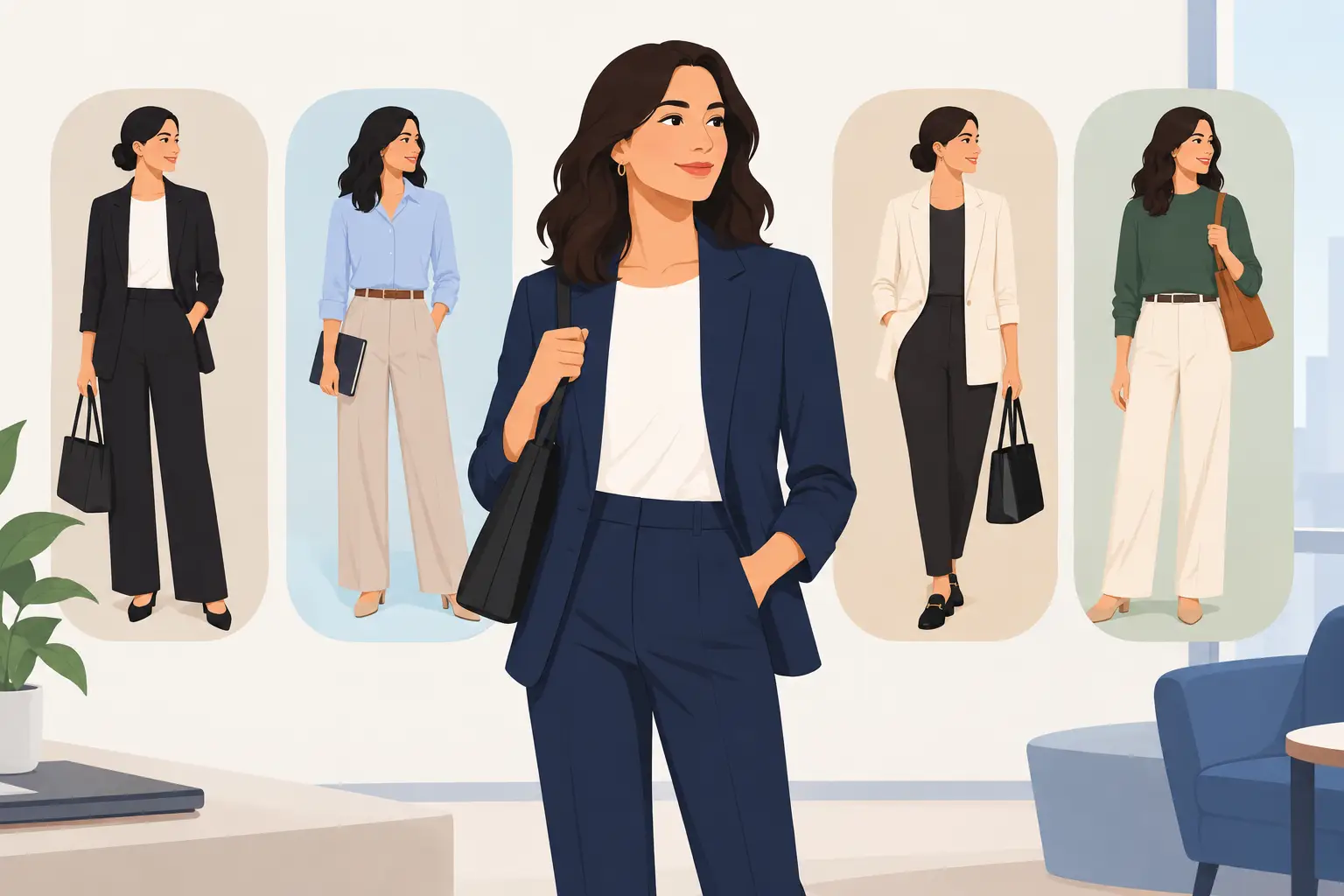
The interview outfit is not supposed to become the main event. It should let the hiring manager focus on your ideas, your experience, and the way you carry yourself. The best outfits for job interviews do that quietly: they look intentional, fit well, and still feel like the person who will show up to work after the offer.
That does not always mean a dark suit. A law firm, a startup, a design studio, and a hospital administration office each read “professional” differently. Your goal is to look one level more polished than the role's everyday dress code, without dressing like you borrowed someone else's career.
Start with the workplace, not the dress code myth
Before you choose a shirt or shoe, look at the company. Check its website, social channels, team photos, and the job description. If everyone is in tailored jackets and formal shoes, a suit or coordinated separates make sense. If the team wears clean denim, knitwear, and sneakers, you can relax the formula while keeping the finish sharp.
When you cannot tell, business casual is the safest middle ground. Think tailored trousers, a tucked-in blouse or button-down, a knit top, a structured overshirt, or a blazer. Add closed-toe shoes in great condition. This combination works across many entry-level, corporate, client-facing, and hybrid-office interviews because it signals care without feeling overly rigid.
For a video interview, dress fully, not just from the waist up. You may need to stand, reach for a document, or adjust your camera. More importantly, wearing a complete outfit changes posture. Choose a top with a clear neckline and a color that separates you from your background rather than disappearing into it.
Best outfits for job interviews by work environment
Corporate, finance, law, and formal client roles
A matching suit is still a smart choice when the role is conservative or highly client-facing. Navy, charcoal, deep gray, and soft black are reliable because they photograph well and pair easily with understated shirts and shoes. A crisp white, pale blue, soft cream, or muted tone near the face keeps the look open and polished.
For a more traditional presentation, wear a suit with a button-down and leather loafers, oxfords, or low-profile flats. A tailored midi dress with a blazer is another strong option. Keep jewelry minimal, avoid visible logos, and make sure the hem, sleeves, and shoulders fit correctly. An expensive suit with sleeves that cover your hands looks less confident than an affordable one that has been altered.
Business casual offices
This is where most interview outfit decisions happen. Start with tailored trousers or a midi skirt, then add a refined top and one structured layer. A navy trouser with a fine-gauge sweater, a cream blouse with straight-leg pants, or a dark knit polo under a lightweight blazer all work well.
Jeans can be acceptable in a casual office, but they are rarely the strongest first choice if you are unsure. If you wear them, choose dark, non-distressed denim with a clean hem, then elevate it with a blazer, polished knit, and leather shoes. Avoid anything overly cropped, ripped, faded, or so tight that it changes how you sit and move.
Creative, retail, and startup teams
You can show more personality here, but intention still matters. Choose one memorable element rather than turning the outfit into a mood board. It could be an interesting textured jacket, a rich color, a sculptural earring, a printed shirt under a solid layer, or a sleek pair of fashion-forward loafers.
A useful formula is elevated basics plus one point of view. Try tailored black pants, a fitted T-shirt or fine knit, a cropped jacket, and clean minimal sneakers if the company culture supports them. Or wear a relaxed suit in a personal color with simple accessories. The message is: you understand style, and you can edit.
Healthcare, education, hospitality, and practical roles
These interviews often call for approachable professionalism. A blouse or button-down with tailored pants, a knee-to-midi dress with a cardigan or blazer, or a polished knit with chinos can all work. Prioritize comfort, movement, and closed-toe shoes, especially if the interview includes a tour.
Avoid wearing anything that needs constant adjustment. If you have to pull down a hem, reposition a neckline, or break in shoes while walking from the parking lot, it will take attention away from the conversation.
Let color make you look rested, not distracted
Interview color is less about rules and more about what happens near your face. The right shade can make your skin look clear, your eyes more visible, and your expression more energized. The wrong shade can make you look washed out before you have said a word.
Navy is a dependable alternative to black for many people because it creates authority with less harsh contrast. Soft white can be more flattering than bright optic white. Muted greens, deep burgundy, warm camel, dusty blue, and jewel tones can also look professional when they suit your coloring.
If you love black, use it thoughtfully. It can look powerful, especially in formal industries, but a black top directly against the face can be severe on some complexions. Break it up with a flattering shirt, scarf, necklace, or jacket in a softer color. Keep patterns controlled: a small stripe, subtle check, or restrained print is usually enough.
Your personal color palette is especially useful when you are choosing between several “safe” options. Instead of defaulting to whatever is black or beige, choose the version of navy, cream, green, or red that makes you look awake. That is a small detail with a noticeable effect on camera and in person.
Fit is the part people notice without realizing it
A strong outfit should let you sit, walk, shake hands, and breathe normally. Test it before interview day. Sit in a chair for five minutes. Raise your arms. Walk up stairs. Check the outfit in natural light and take a quick phone photo from the front and side.
Pay attention to shoulder seams, trouser length, gaping buttons, and shoe condition. These details read as more polished than labels. Steam wrinkles, remove lint, and check that your bag is clean and functional. A structured tote, briefcase, or simple crossbody is better than carrying loose papers and a coffee cup into the room.
Grooming should support the same feeling. Neat hair, clean nails, fresh breath, and a light hand with fragrance go a long way. You do not need to look unlike yourself. You just want every visible choice to say that you prepared.
Build the outfit the night before
Do not make this decision ten minutes before leaving. Lay out the full look, including underlayers, socks, belt, bag, outerwear, and weather-appropriate shoes. Try it on at the same time of day you will wear it, especially if daylight affects how the colors read.
Take a photo. It immediately shows whether proportions are balanced and whether one piece is pulling attention for the wrong reason. If you are deciding between two options, choose the one that makes you stand taller and fiddle less. Confidence is often practical: a jacket that fits, shoes you can walk in, and a color that makes your face look alive.
If your closet is full but interview-ready combinations are hard to see, use SHMOT to scan the pieces you own, try outfit options on your photo, and plan the final look before the morning gets busy.
Wear the outfit once in a low-stakes setting if you can. By interview day, it should feel familiar enough that you can forget about it and focus on the conversation you came to have.